What is a Phase ?
“Thermodynamically a phase refers to states of matter which we generally classified as solid, liquid and gaseous” (Clayton Crowe; Handbook of Multiphase flow modeling).
Before we enter into any further discussion it is very important to understand what exactly do we mean by phase.
From modeling point of view there is a slight modification from the definition. An obvious definition of “phase” is thermodynamic state (gas, liquid, solid). However it is possible to define different phases for computational purpose although the thermodynamic states are not different (V.V.Ranade; Computational Flow Modeling For Chemical Reactor Engineering)
Examples:
- dispersed gas
- solid flows with wide distribution of particle sizes usually define multiple phases representing solid phase.
Sometimes it is useful to treat thermodynamically different phases as single phase for computational purposes.
Example : Gas-liquid-solid slurry reactor, if the solid particles are fine enough to essentially follow liquid flow it will be convenient to treat the liquid-solid mixture as slurry phase and model the 3 phase system and as 2 phase system (gas slurry).
Thus from the computational point of view we have different or modified definitions of phase compared to thermodynamic state. Basically this comes from the point of view when we say that within computational modeling, phases are treated as different if they have different flow behavior or different velocity profiles. So if two state of matter have different velocity profile they are considered as different phases even if thermodynamically they are of same phase.
Example: Oil and water, even though they are thermodynamically a single phase (i.e. liquid) but since they show different flow behavior with a fluid domain they are considered as 2 different phases.
Now since we have clearly understood the different phases i.e. computationally how phase are treated compared to thermodynamic state of matter we shall now conclude with the multiphase flow definition.
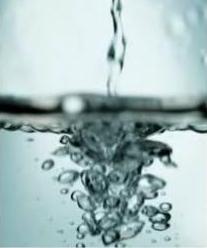
Multiphase flow: as the name suggests it involves the simultaneous flow of mixture of phases such as gas (like bubbles) in a liquid , or liquid (like droplets) in gases and similar such flows.
Figure:
Even a jet of water falling into a mass of water can be considered as multiphase as the water jet is interacting with air surrounding it.
Why study Multiphase Flow ?
Multiphase flows are found in many industrial applications like chemical reactors and process flow industry and many other applications wherever there are multiple phases present. Also naturally occurring phenomena like rivers and cloud formation involve multiple phases.
In practice most of the applications will involve more than 1 phase. In such applications, in order to model them it is difficult to isolate single phase from this multiple phases flow involved. Therefore to resolve or study such type of flows knowledge of multiphase flow physics is extremely important in order to carry out any type of experiment or simulation on such applications. Thus multiphase flow becomes a specialized domain within fluid mechanics itself and needs separate models or separate treatment in order to simulate them.
Classifications of Multiphase Flows:
Multiphase flow is a very broad branch of study but these flows are classified into different categories which are mainly based upon number of phases and their types.
- Dispersed Flows:
In such flows one of the phases is in the form of discrete elements. Their is no connection between individual discrete phase elements which may be in the form of particles or droplets.
Example : droplets in gas, bubbles in liquid, solid particles within gas.
- Separated flows:
In such types of flows the 2 phases involved are separated by a distinct line of contact. This basically means that they can travel from one location to another in the same phase and remain in the same medium.
Example : annular flow with a liquid layer along the pipe walls and a gaseous inner core.
- Gas-liquid Flows:
In such flows one phase is gaseous and another is in liquid state, and can be in different forms like bubbly flow and annular flow.
- Gas-Solid flows:
In such type of flows we generally have gas with suspended solid particles. Granular flows are also among this where particulate-particulate and particulate-wall interactions are more important than the forces due to the interstitial gas.
- Liquid-Solid Flows:
In these types of flows solid particles are carried by liquid, also called as slurry flows.
- Three phase flows:
This is the most complex type in multiphase flows encountered in many engineering problems. As the number of phases increases the modeling becomes complex. For example, bubbles in a slurry flow gives rise to 3-phase flowing together. This is an emerging topic for research and computational modeling.
Industrial examples:
- Solid drying systems
- Droplet separation
- Packed bed reactors
- Foam
- Packed columns
- Centrifugal extractors
- Mist eliminators
- Sedimentation
- Cyclone separators
- Mixers
- bubble columns
- Fluidized bed systems
- Particulate systems
- Precipitators
- Dust collection systems
- Solid suspensions
Bubble column reactors:
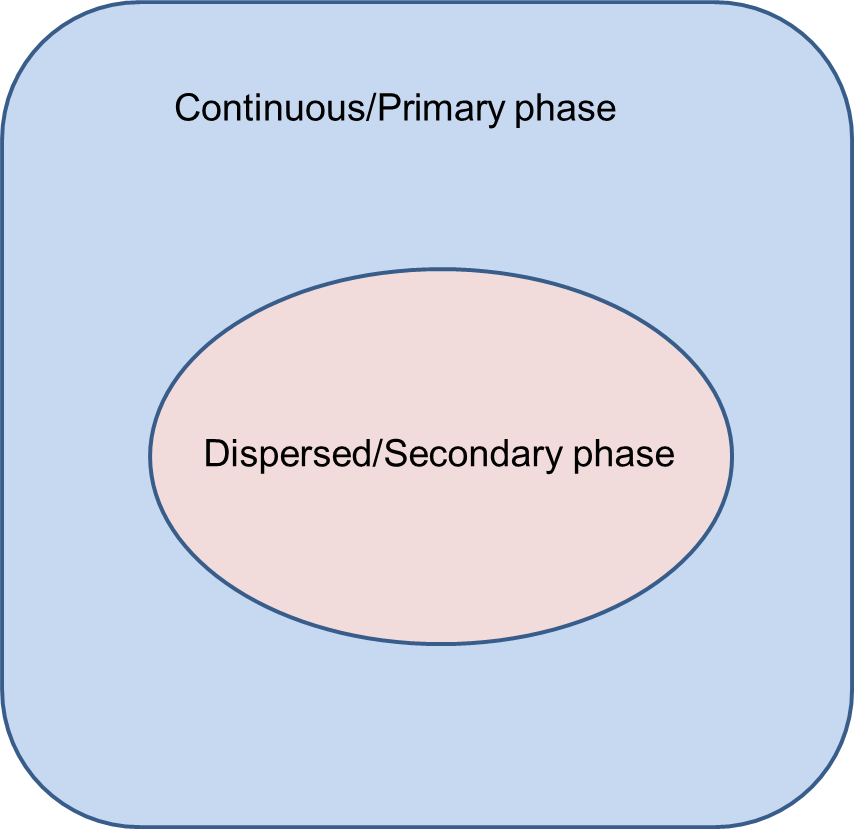
When we say a multiphase flow is present, the predominantly present phase is referred to as basically continuous phase and the secondary medium is defined as the phase which is present in lesser extent, or occupies lesser volume. Thus one phase is primary that occupies most volume and rest of the phase are defined as secondary phase that occupies less volume.
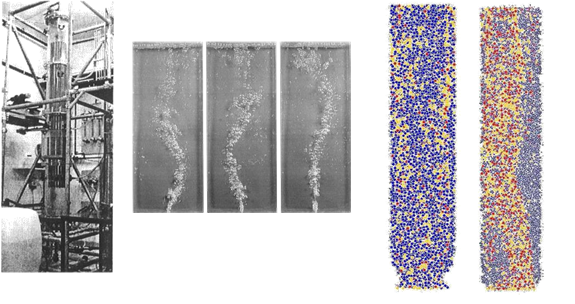
Now we will see in detail bubble column reactors. These are the equipments used in chemical industry for gas-liquid reactions. They are built of vertical columns of cylindrical forms. Gas is introduced at the bottom of column which causes turbulent stream and thus provide required stirring action for reactive gas exchange. The CFD modeling of this is predominantly done, an example is as shown in the figure below, with 2 phases as gas & liquid.
Stirred tank reactor:
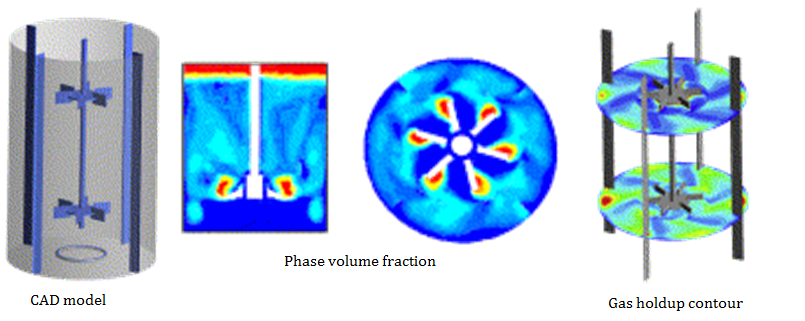
This is defined basically to carry out chemical reaction. It contains a cylindrical or other shape tank having a central rotary element that causes stirring between different phases hence referred as stirred tank reactor. The impeller stirs the reagent which leads to proper mixing of different phases.
Fluidized bed reactor:
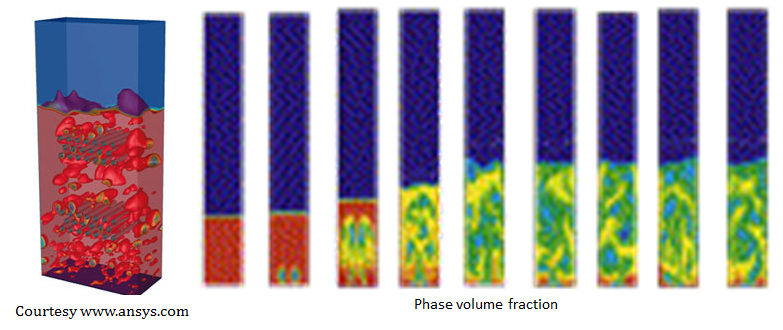
These basically have solid fluid mixtures ultimately behaving as a fluid, shown in fig. Below figure shows example of volume distribution of a CFD result within a fluidized bed reactor. There is an insertion of pressurized fluid through the particulate medium. Fluid is purged or forced through the bottom packed particulate medium that cause particulates to act as suspension. So the entire system has ability to provide high levels of contacts between gases and solids.
Applications:
- Chemical reaction
- Solid mixing
- Enhanced heat transfer
- Drying
- Heat treatment
- Coating
Governing Equations of Fluid Flow:
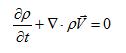
Continuity equation:
Momentum equations:
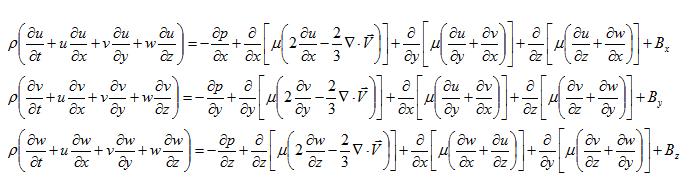
Energy equation:

- Multiphase flows – Modelling approaches:
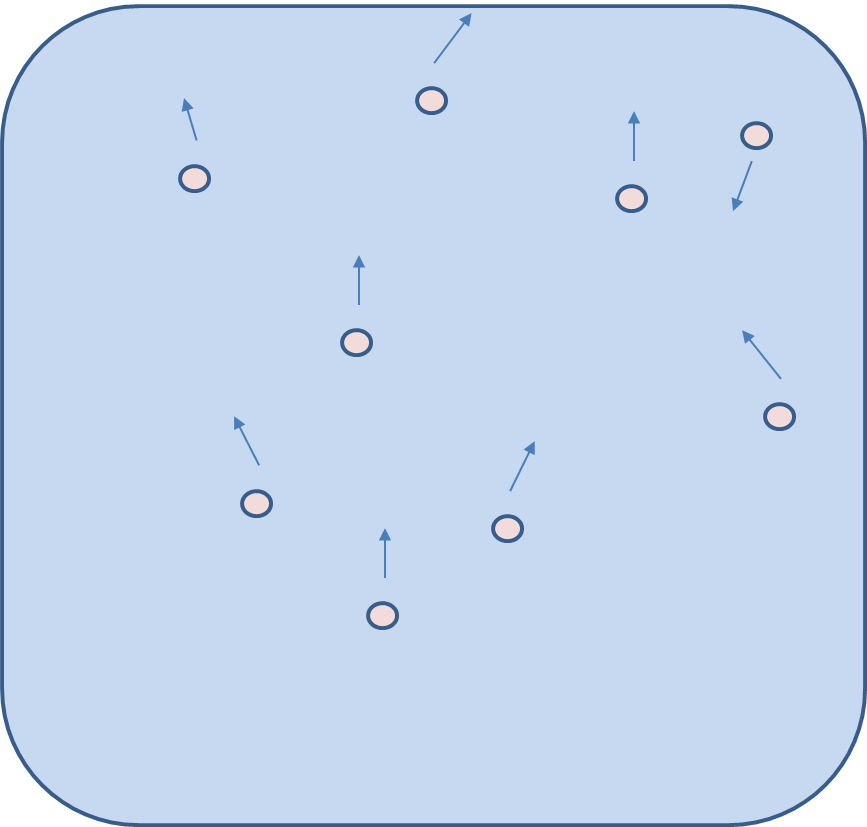
- Lagrangian specification – Here the observer follows an individual fluid parcel as it moves through space and time. Equations are composed by using this fundamental concept.
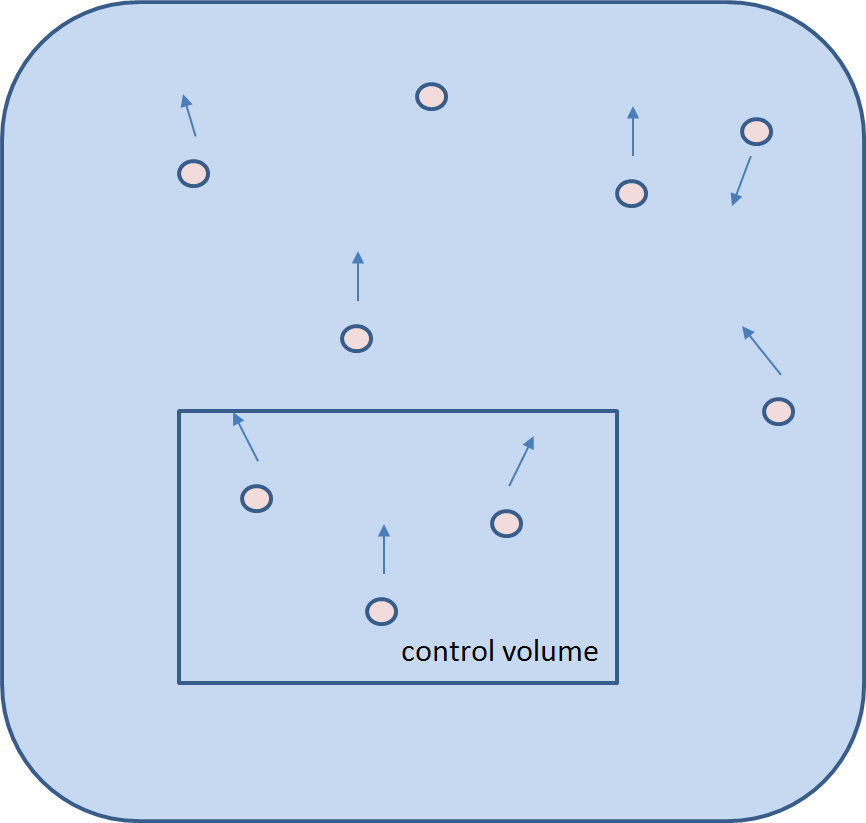
- Eulerian specification – It focuses on specific locations in the space through which the fluid flows as time passes.
- Eulerian – Lagrangian Approach: Utilises Eulerian framework for the continuous phase and Lagrangian framework for dispersed phases
- Eulerian – Eulerian Approach: Utilises Eulerian framework for both the phases
- Volume of Fluid Approach: Eulerian framework for both the phases with specialised interface treatment.
- Eulerian-Lagrangian approach:
- Eulerian-Eulerian approach:
- Volume of Fluid approach:
Discover more from Dr. Ganesh Visavale
Subscribe to get the latest posts sent to your email.
 Dr. Ganesh Visavale
please suggest me how to model a flow in an annular heat pipe in CFD
LikeLike
mail me on visavaleganesh@gmail.com
LikeLike
Is there any tutorial relating to sloshing analysis of gearbox?
LikeLike
Very well explained!
LikeLike