Introduction
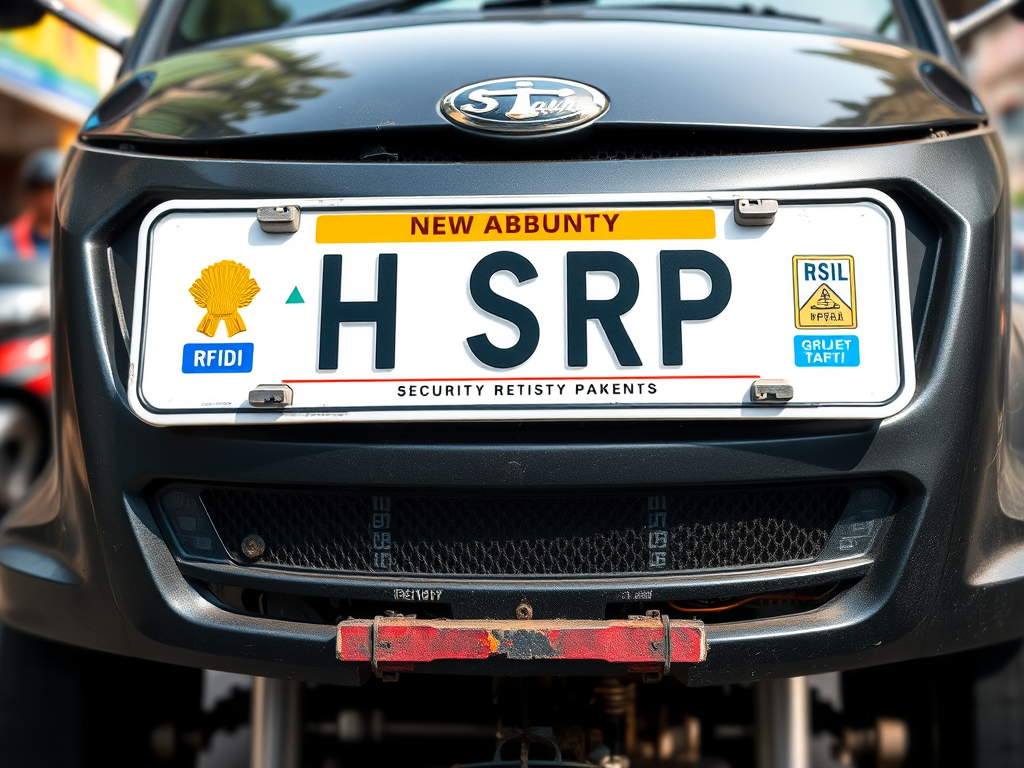
In a significant move toward road safety and vehicle security, the Maharashtra government has mandated that all vehicles registered before April 1, 2019, must install High-Security Registration Plates (HSRP) by March 31, 2025. This policy aims to curb vehicle theft, counterfeiting, and improve law enforcement efficiency. However, concerns over cost burden, privacy risks, enforcement fairness, and administrative efficiency have sparked debate.
This blog delves into the legal foundation of the HSRP mandate, its impact on vehicle owners, and possible legal challenges. It also compares similar laws in major countries, analyzing both successes and failures to extract best practices that Maharashtra could adopt for a smoother and more equitable rollout.
1. The Legal Framework Behind HSRP Regulation
The Motor Vehicles (Amendment) Act, 2019, coupled with Rule 50 of the Central Motor Vehicle Rules (CMVR), 1989, provides the legal framework for standardized number plates to prevent vehicle cloning, counterfeiting, and unauthorized transfers.
The Maharashtra Transport Department is enforcing this mandate under its authority derived from the Motor Vehicles Act, 1988. Non-compliance can result in fines ranging from ₹500 to ₹1,500.
While the law aims to enhance security, issues related to cost, execution, and fairness remain contentious. Examining how other countries have handled similar mandates can offer valuable insights.
2. How Other Countries Handle Vehicle Registration Security
United States: Decentralized System with Technological Advancements
✅ Success Story: Texas successfully implemented RFID-enabled license plates, reducing vehicle theft by 60% within three years. The plates are linked to law enforcement databases, enabling real-time tracking.
❌ Failure Example: California’s attempt to introduce digital license plates with GPS tracking faced strong opposition due to privacy concerns, leading to legal challenges.
✔ Lessons for Maharashtra: Integrating RFID technology can enhance security, but clear privacy safeguards must be established to prevent legal disputes.
United Kingdom: ANPR-Integrated Number Plates
✅ Success Story: The Automatic Number Plate Recognition (ANPR) system has significantly reduced toll fraud and tax evasion. The system ensures that vehicle-related fines are collected efficiently.
❌ Failure Example: A data breach in 2021 exposed millions of vehicle registration records, raising concerns about data security vulnerabilities.
✔ Lessons for Maharashtra: ANPR-based enforcement can improve compliance, but strong cybersecurity protections are crucial.
Germany: Laser-Etched Plates & Centralized Database
✅ Success Story: Germany’s laser-etched plates linked to a centralized vehicle database have dramatically reduced vehicle identity fraud.
❌ Failure Example: A plate re-registration system failure in 2018 led to massive delays and public backlash.
✔ Lessons for Maharashtra: A centralized database improves tracking but must be accompanied by efficient administrative processes.
China: RFID-Based Digital Tracking
✅ Success Story: China’s RFID-based license plates, scanned at toll booths and parking lots, have increased toll collection efficiency by 50%.
❌ Failure Example: The use of vehicle tracking for mass surveillance has raised human rights concerns internationally.
✔ Lessons for Maharashtra: RFID-based tracking can improve law enforcement, but strict data protection laws are needed to prevent misuse.
3. Consumer Rights vs. Government Mandate: Finding a Balance
A critical legal question arises—is it fair to impose the cost of HSRP on vehicle owners when the requirement did not exist at the time of purchase?
Key Consumer Concerns
- Financial Burden:
- Cost of HSRP installation:
- ₹450 for two-wheelers
- ₹500 for three-wheelers
- ₹745 for four-wheelers (excluding GST)
- The government has not offered any subsidy, making this an additional financial burden on vehicle owners.
- Cost of HSRP installation:
- Lack of a Phased Approach:
- Many countries, such as Germany and the UK, allowed a gradual transition rather than a sudden deadline.
- Why hasn’t Maharashtra considered a longer transition period to ease compliance?
- Lack of Government Assistance:
- Some consumers argue that since HSRP is a government-mandated security measure, its cost should be covered or subsidized by the government.
- Could Maharashtra introduce a cost-sharing model to reduce the financial strain?
4. Privacy and Data Protection Concerns: A Growing Threat
Since HSRPs have 10-digit laser-etched PINs linked to engine and chassis numbers, privacy concerns arise. Recent global data breaches show how vulnerable vehicle registration systems can be:
🔴 Volkswagen’s Cariad Data Breach (December 2024)
- Data from 800,000 electric vehicle owners was exposed, revealing precise vehicle locations linked to driver identities.
🔴 Spain’s Traffic Authority Hack (May 2024)
- 27 million registered drivers’ data was compromised, raising concerns about government system vulnerabilities.
Legal Implications for Maharashtra
- Cybersecurity Measures: Maharashtra must adopt stronger encryption and secure storage for HSRP data to prevent similar breaches.
- Data Protection Law Compliance: The government should ensure compliance with the Digital Personal Data Protection Act, 2023.
🚨 Unless these safeguards are in place, Maharashtra could face legal challenges regarding privacy rights violations.
5. Legal Challenges and Case Studies
🚨 Legal Precedents in India
- Karnataka High Court Case (2023): The HSRP Manufacturers’ Association of India challenged the exclusive licensing of manufacturers for HSRP installation, citing unfair trade practices.
- Supreme Court Rulings: The Supreme Court in Maninderjit Singh Bitta v. Union of India upheld the need for HSRPs but cautioned against unreasonable costs imposed on vehicle owners.
🚨 International Cases
- Tesla v. Sweden’s Transport Agency (2023): Tesla sued the Swedish government over unfair license plate restrictions, and the court ruled in Tesla’s favor, highlighting the importance of procedural fairness.
These cases show that legal action can succeed when arguing for fair implementation and consumer protection rather than outright opposition to HSRPs.
6. Conclusion: The Path Forward
The HSRP mandate in Maharashtra is legally valid, but its financial burden, privacy risks, and rigid enforcement make it controversial.
Key Takeaways:
✔ A phased implementation and extended deadlines could reduce compliance pressure.
✔ Government subsidies or installment-based payments could ease financial strain.
✔ Stronger privacy protections and transparent data management are essential.
✔ Legal challenges may arise if fairness and procedural transparency are not ensured.
💬 What’s Your Take?
Do you think Maharashtra’s HSRP mandate is fair? Should the government provide financial relief? Share your thoughts in the comments! 🚘⚖
#HSRP #MotorVehicleLaw #RoadSafety #LegalCompliance #TrafficRules #VehicleRegistration #TransportPolicy #IndianLaw #MaharashtraUpdates #GovernmentRegulations #PublicInterest
Discover more from Dr. Ganesh Visavale
Subscribe to get the latest posts sent to your email.
 Dr. Ganesh Visavale