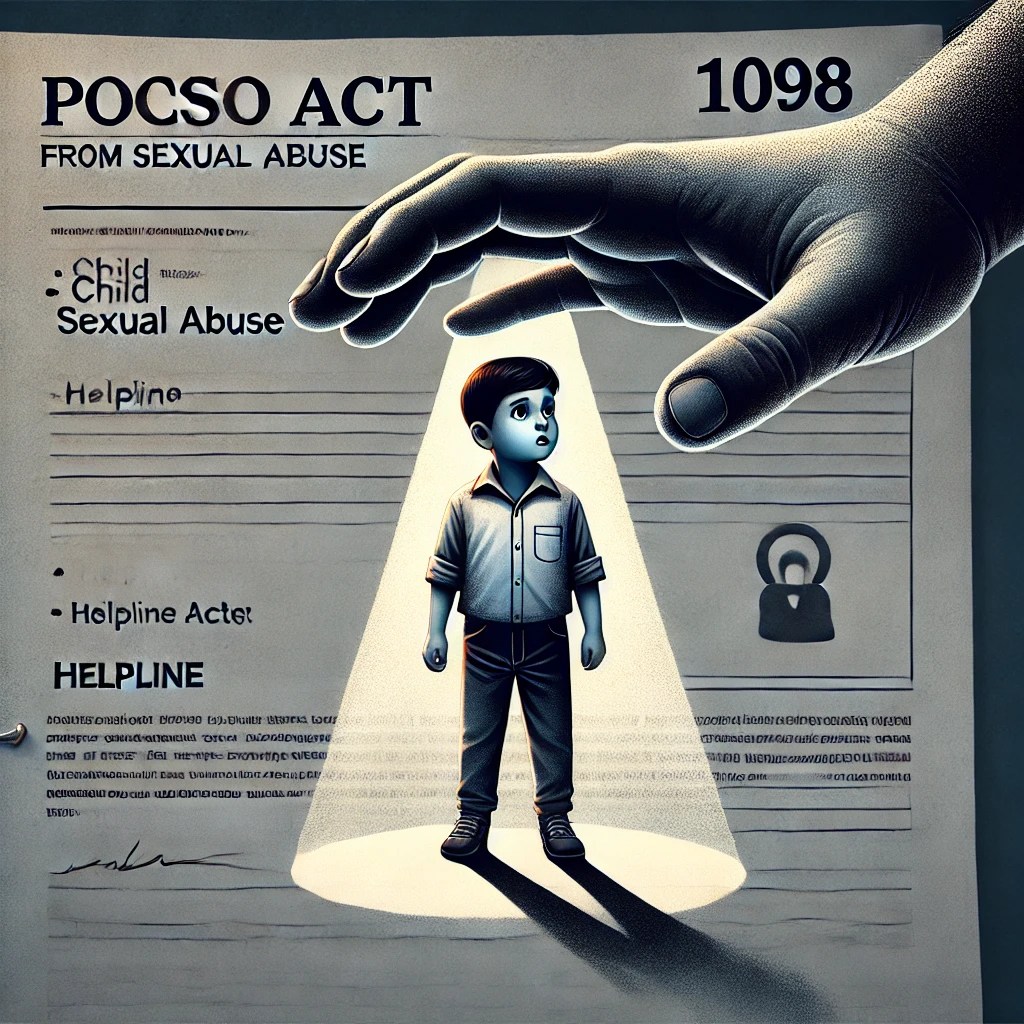
The Unspoken Danger 🚨
Innocence is a child’s most precious gift, yet crimes against minors continue to rob them of their safety and security. One of the most underreported but deeply traumatic forms of child abuse is bad touch. Unlike physical assault or rape, bad touch often remains unspoken due to lack of awareness, fear, or societal stigma. However, with the legal framework evolving and cases like the recent dismissal of a Lieutenant Colonel for sexually assaulting a minor, it is time to discuss this issue openly.
Understanding Bad Touch: What It Means? 🤲
Bad touch refers to any inappropriate or non-consensual physical contact that makes a child feel uncomfortable, scared, or violated. It includes but is not limited to:
- Unwanted hugging or kissing 🚫
- Touching private parts with sexual intent 🔴
- Forcing a child to touch another person inappropriately ✋
- Groping or fondling without consent ❌
This form of abuse is often dismissed as “not serious” by offenders and sometimes even by victims who fail to recognize it as a crime. However, under Indian law, such acts are treated as serious offenses.
Legal Framework: Protection of Children from Sexual Offences (POCSO) Act 📜⚖️
India has a stringent law in place to safeguard minors from sexual abuse. The Protection of Children from Sexual Offences (POCSO) Act, 2012 criminalizes all forms of sexual abuse against minors (both boy & girl), including bad touch.
Key provisions include:
🔹 Section 7 & 8: Defines and penalizes sexual assault, including inappropriate touching, with imprisonment of up to 5 years.
🔹 Section 9 & 10: Classifies aggravated sexual assault when committed by persons in authority (teachers, police, military officers, etc.), with higher penalties.
🔹 Section 21: Makes it mandatory for individuals, including parents and teachers, to report suspected sexual offenses.
Legal Maxim: Lex talionis (Law of Retaliation) – While the Indian legal system does not follow an eye-for-an-eye approach, it ensures strict punishment for crimes against children to deter offenders.
Landmark Case Laws 🏛️
- State v. Anand Kumar (2014) – The Delhi High Court upheld a 5-year sentence under POCSO for inappropriate touching of a minor girl, emphasizing that lack of penetration does not negate the crime.
- Satish Ragde v. State of Maharashtra (2021) – The Bombay High Court controversially ruled that skin-to-skin contact is necessary for the offense to be considered sexual assault. This judgment was later overturned by the Supreme Court, ensuring that inappropriate touch, even over clothing, remains a punishable offense.
- Recent Military Case (2024) – A Lieutenant Colonel was dismissed from service for sexually assaulting a minor. This case sets a precedent that even highly ranked officials are not above the law when it comes to crimes against children.
Why is This Crime Underreported? 🤐
Despite legal protections, many cases of bad touch go unreported. Reasons include:
🔸 Fear & Shame – Children may feel ashamed or scared to talk about their experience.
🔸 Lack of Awareness – Many children and parents do not recognize bad touch as a crime.
🔸 Threats by Offenders – Perpetrators, often known to the victim, threaten them into silence.
🔸 Social Stigma – Families avoid reporting due to fear of societal judgment.
Impact on the Child’s Mental Health 🧠💔
A bad touch incident, even if seemingly minor, can cause severe trauma in children, leading to:
- Anxiety & fear of authority figures 😟
- Trust issues in relationships 🚧
- Depression and suicidal tendencies 😞
- Post-Traumatic Stress Disorder (PTSD) 😔
Quote: “Childhood should be carefree, playing in the sun; not living a nightmare in the darkness of the soul.” – Dave Pelzer
Role of Parents, Schools & Society 👨👩👧👦🏫
- Educate & Empower Children – Teach them the difference between good touch and bad touch.
- Open Communication – Encourage children to speak up without fear.
- Strict School Policies – Schools must have child protection committees and background checks for staff.
- Social Awareness Campaigns – Use media and NGOs to spread awareness.
- Encouraging Legal Action – Victims must be encouraged to file complaints under POCSO.
Relevance in Today’s Society 🌍
In an era where crimes against children are increasing, we must strengthen our legal framework and ensure faster convictions. Digital spaces have also become new avenues for child exploitation, making cyber safety equally critical. Hashtags like #SafeChildhood, #NoBadTouch, and #ProtectMinors must gain momentum.
Conclusion ✍
Bad touch is not a trivial issue—it is a gateway to deeper forms of sexual abuse and must be addressed with zero tolerance. With stronger legal enforcement, societal awareness, and parental vigilance, we can create a safer environment for our children.
Call to Action: If you witness or suspect any form of child sexual abuse, report it immediately to the Child Helpline (1098) or the local police. Protecting a child today ensures a safer tomorrow. 🚀
#SafeChildhood #NoBadTouch #ProtectMinors #POCSOAct #JusticeForChildren
Discover more from Dr. Ganesh Visavale
Subscribe to get the latest posts sent to your email.
 Dr. Ganesh Visavale