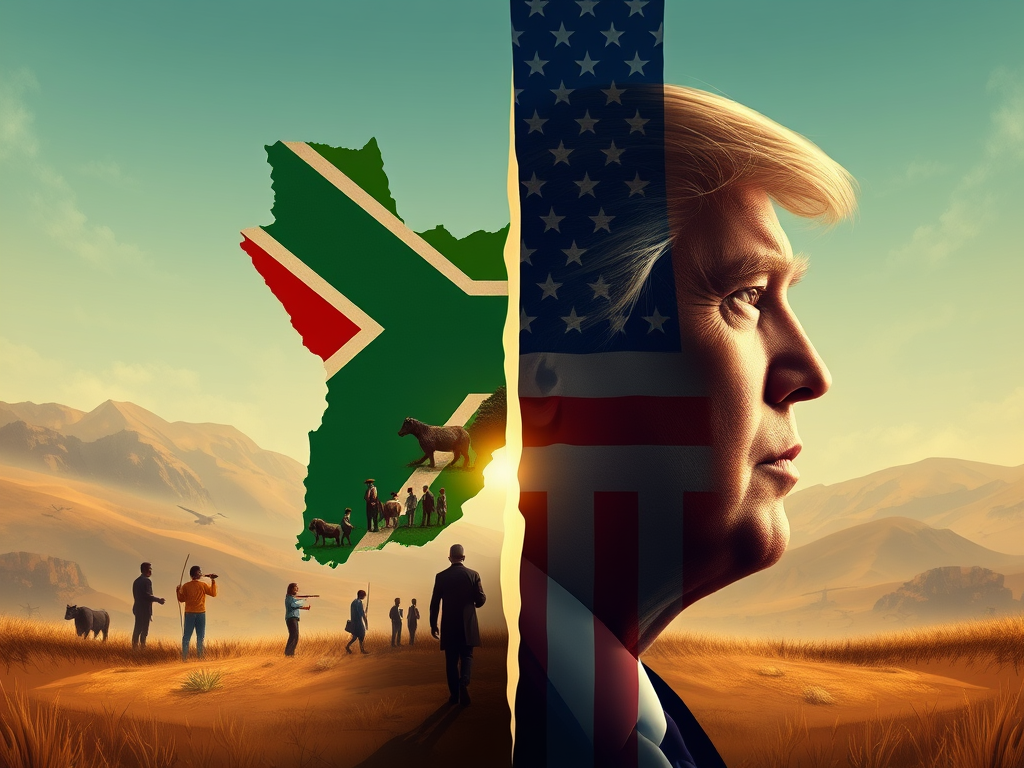
International relations are shaped by laws, policies, and historical contexts. The recent conflict between South Africa and the United States over land reform is a perfect example.
🔍 On one side, South Africa says its new Expropriation Act is about correcting past injustices.
🔍 On the other, former U.S. President Donald Trump claims it unfairly targets white farmers.
This issue goes beyond politics – it raises legal, diplomatic, and human rights questions. Let’s break it down. 👇
🏡 What is the Expropriation Act?
The Expropriation Act was signed by South African President Cyril Ramaphosa to replace old apartheid-era laws.
📜 Key Features:
✅ The government can take land for public projects (roads, schools, housing).
✅ Fair compensation is required, except in extreme cases.
✅ The goal is to redistribute land more fairly, as most farmland is still owned by a small white minority.
💡 Does it allow land grabs? No. Every case must follow legal and constitutional procedures.
💥 Why is Trump So Opposed to It?
Trump sees this law as a racial attack on white South Africans, especially Afrikaner farmers.
🚨 He called it “immoral and unfair.”
🚨 He cut U.S. aid to South Africa.
🚨 He even proposed refugee status for white South Africans!
According to Trump, this law is a violation of human rights and sets a dangerous global precedent.
🏛 The Legal Perspective: Does This Fit a Legal Analysis?
Yes, this issue can be analyzed through legal and international law angles:
1️⃣ Constitutional Law (South Africa 🇿🇦)
South Africa’s Constitution allows land expropriation if it serves the public good. The Expropriation Act must:
✔ Follow due process (legal procedures).
✔ Ensure fair compensation unless legally justified.
✔ Be non-discriminatory—it must apply to all landowners, not just white farmers.
🔹 Legal Question: Does the law truly uphold “just and equitable” principles?
2️⃣ Human Rights Law 🏛
Trump argues that the law violates property rights and targets a racial group.
✔ International Human Rights Treaties (like the Universal Declaration of Human Rights) protect private property.
✔ However, international law also allows land reform to correct past injustices.
🔹 Legal Question: Does South Africa’s law strike a balance between land reform and property rights?
3️⃣ International Relations & Trade Law 🌍
The USA’s sanctions and aid cuts could affect South Africa’s economy.
✔ The World Trade Organization (WTO) allows economic actions if they follow international trade laws.
✔ South Africa could challenge the USA’s response as unfair diplomatic pressure.
🔹 Legal Question: Can the USA legally impose trade penalties over a domestic land policy?
⚖ What Happens Next?
This issue raises tough legal and diplomatic questions:
🔴 Will South Africa face lawsuits from affected landowners?
🔴 Could Trump’s pressure influence international policy?
🔴 Will this become a precedent for land reforms worldwide?
Regardless of opinions, this USA-South Africa dispute highlights the power of law in international relations.
What do you think? Does Trump have a point, or is South Africa justified? Let’s discuss! 💬👇
#SouthAfrica 🇿🇦 #USA 🇺🇸 #LandReform #ExpropriationAct #InternationalRelations #LegalAnalysis #HumanRights #PropertyRights #LandJustice #DiplomaticTensions #GlobalPolitics #ConstitutionalLaw #TradeLaw #Trump #CyrilRamaphosa #Geopolitics #LawAndPolicy #WTO #InternationalLaw #AfricaPolitics #LegalDebate #UPSC
Discover more from Dr. Ganesh Visavale
Subscribe to get the latest posts sent to your email.
 Dr. Ganesh Visavale