Introduction
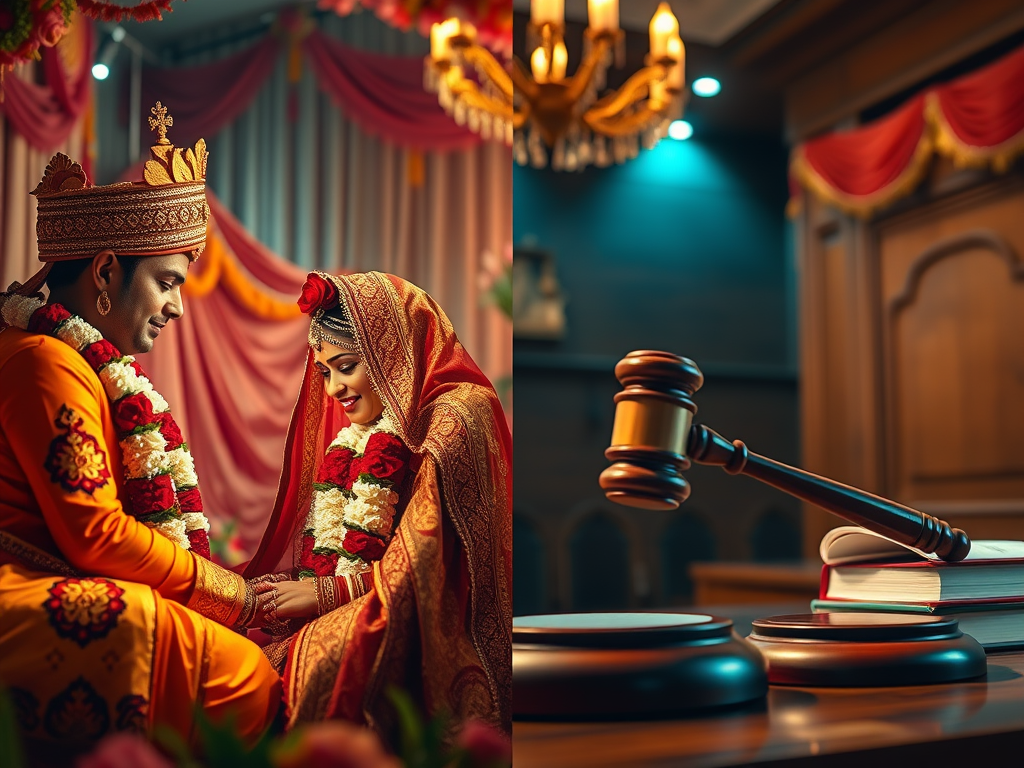
Marriage is considered a sacred institution in Hindu society, deeply rooted in religious and cultural traditions. However, in the modern legal framework, marriage is also a contract, and the law provides a mechanism for its dissolution through divorce when cohabitation becomes impossible. The Hindu Marriage Act, 1955 (HMA) governs the rules of marriage and divorce for Hindus, Buddhists, Jains, and Sikhs in India.
The right to seek divorce is a critical aspect of personal liberty and justice, ensuring that individuals are not trapped in unhappy or abusive marriages. But who can seek divorce under the Hindu Marriage Act? Let’s delve deeper into the legal framework, key doctrines, landmark judgments, and the societal impact of divorce laws.
Who is Covered Under the Hindu Marriage Act?
Under Section 2 of the Hindu Marriage Act, 1955, the Act applies to:
✅ Hindus by religion (including followers of Arya Samaj, Brahmo Samaj, and Virashaiva faiths)
✅ Buddhists, Jains, and Sikhs (despite being separate religions, they are included under HMA)
✅ Persons who are not Muslim, Christian, Parsi, or Jew, unless they prove they are governed by a different law
The Act applies to both men and women of the above categories, ensuring equal rights to seek divorce.
Grounds for Divorce Under the Hindu Marriage Act
Section 13 of the HMA provides various grounds for divorce:
1. Adultery
📜 “No-fault marriage is a myth where trust is broken.”
- If either spouse engages in voluntary sexual relations with someone other than their spouse, the aggrieved party can file for divorce.
- Landmark Case: Joseph Shine v. Union of India (2018) decriminalized adultery (Section 497 IPC) but upheld it as a civil wrong in matrimonial law.
2. Cruelty
- If one spouse treats the other with cruelty (physical or mental), the victim can seek divorce.
- Landmark Case: Narendra v. K. Meena (2016) – Continuous false allegations of infidelity were considered mental cruelty.
3. Desertion
- If one spouse leaves the other for at least two years without reasonable cause, it is grounds for divorce.
- Landmark Case: Bipinchandra Jaisinghbhai Shah v. Prabhavati (1956) – Defined desertion as intentional abandonment.
4. Conversion to Another Religion
- If a spouse converts to another religion and ceases to be Hindu, the other spouse can seek divorce.
5. Mental Disorder
- If a spouse suffers from a mental disorder making it impossible to live together, divorce can be granted.
- Landmark Case: Alka Sharma v. Abhinesh Sharma (2019) – Severe schizophrenia was grounds for divorce.
6. Incurable Leprosy, Venereal Disease, or Renunciation of the World
- Leprosy and venereal diseases (sexually transmitted diseases) were earlier grounds for divorce but have now been repealed by the 2019 amendment.
- If a spouse renounces the world and becomes a hermit or ascetic, the other spouse can file for divorce.
7. Presumption of Death
- If a spouse is missing for seven years, the other can seek divorce.
Additional Grounds for Women (Section 13(2))
The Act provides additional grounds for women:
✅ Husband guilty of rape, sodomy, or bestiality.
✅ Woman married before 15 years of age can repudiate marriage after attaining 18 years.
✅ If the husband has a pre-existing marriage, the second wife can seek divorce.
Concept of Irretrievable Breakdown of Marriage
The Supreme Court has often used the principle of irretrievable breakdown of marriage, even though it is not explicitly in HMA.
- Case: Naveen Kohli v. Neelu Kohli (2006) – The Court suggested amending HMA to include this as a valid ground.
- Recent Development: The Marriage Laws (Amendment) Bill, 2013 was proposed but not passed.
Relevance in Today’s Society
📌 Divorce laws under HMA protect individual autonomy while balancing societal values.
📌 Gender-neutral divorce laws empower women to exit abusive marriages.
📌 The shift towards no-fault divorce laws aligns with democratic principles and personal freedom.
📌 Landmark cases like Shyam Sunder v. Santadevi (2017) uphold that prolonged separation is enough to dissolve a broken marriage.
Conclusion
Divorce laws under the Hindu Marriage Act, 1955 provide a structured and legal means for individuals to seek relief from failed marriages. While social stigma around divorce persists in India, legal provisions ensure fairness and justice. With evolving judicial interpretations and societal acceptance, India is moving towards a more progressive matrimonial law system that upholds the principles of equity, justice, and personal liberty.
🔖 #HinduMarriageAct #DivorceLaws #LegalRights #FamilyLaw #JusticeForAll
Discover more from Dr. Ganesh Visavale
Subscribe to get the latest posts sent to your email.
 Dr. Ganesh Visavale