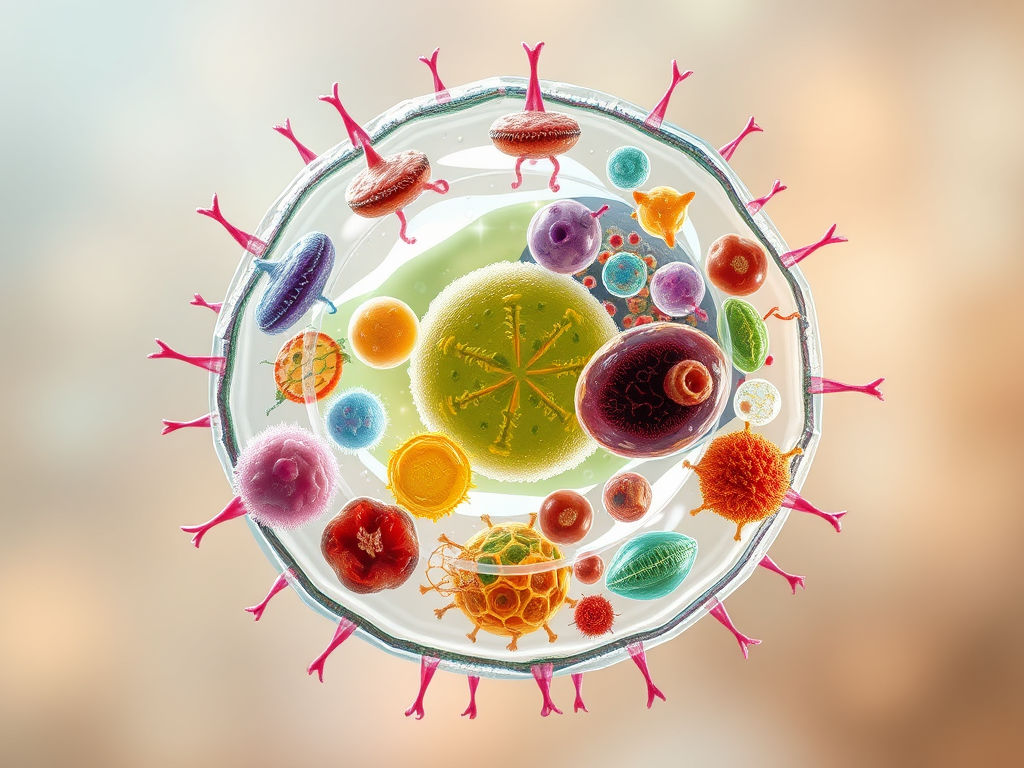
📘 CELL: BASIC UNIT OF LIFE
1. What is a Cell?
- The smallest structural and functional unit of living organisms.
- All organisms—from microscopic bacteria to humans—are made up of cells.
2. History of Cell Discovery
- 1665: Robert Hooke observed cork cells → coined the word “cell”.
- 1838: Schleiden and Schwann → Cell Theory:
“All living organisms are made of cells.” - 1885: Rudolph Virchow → “Cells arise from pre-existing cells”.
3. Levels of Organization in Living Organism
- Cell
- Tissue
- Organ
- Organ System
- Organism
4. Observing Cells
- Cells are extremely small → measured in micrometers and nanometers.
- Need a compound microscope or electron microscope.
5. Types of Cells
✔ Plant Cells
✔ Animal Cells
6. Shape & Size of Cells
- Vary according to function: circular (RBC), spindle-shaped (muscle), long (nerve), spherical (egg cell), irregular (amoeba).
📘 CELL STRUCTURE & ORGANELLES
1. Main Parts of a Cell
- Cell Wall
- Present only in plant cells.
- Gives shape & protection.
- Cell (Plasma) Membrane
- Thin, flexible, outer covering of animal cells.
- Controls entry/exit of materials.
- Cytoplasm
- Jelly-like fluid where organelles are present.
- Cell Organelles
- Nucleus
Controls all cell activities; double membrane; contains DNA. - Endoplasmic Reticulum (ER)
Network that modifies proteins and transports them. - Golgi Bodies
Packaging & distribution centre of proteins. - Mitochondria
“Powerhouse of the cell” → produce energy. - Lysosomes
Digest unwanted materials; “suicide bags”. - Vacuoles
Storage; large central vacuole in plant cells, small in animals. - Plastids (in plants only)
- Chloroplasts → contain chlorophyll → photosynthesis.
- Nucleus
2. Differences Between Plant and Animal Cells
| Plant Cell | Animal Cell |
| Cell wall present | Absent |
| Chloroplasts present | Absent |
| One large vacuole | Several small vacuoles |
| Mostly rectangular | Mostly round |
3. Prokaryotic vs Eukaryotic Cells
- Prokaryotic: No membrane-bound organelles (bacteria).
- Eukaryotic: Have nucleus & organelles (plants, animals).
📘 MICRO-ORGANISMS
1. What are Micro-organisms?
- Tiny organisms invisible to naked eye, seen under a microscope.
2. Where Do They Occur?
- Air, water, soil, food, sewage, garbage, bodies of plants & animals.
3. Types of Micro-organisms
- Bacteria
- Fungi
- Algae
- Protozoa
- Viruses
4. Microbial Cell Structure
- Most microbes are unicellular.
- Bacteria and viruses are prokaryotic.
- Components: Plasma membrane, cytoplasm, nucleoid, ribosomes.
5. Growth Requirements
- Temperature: 25°C – 37°C
- Moisture and nutrients
- Some need oxygen; some do not
- Can survive extreme cold, heat, dryness by forming protective coverings.
6. Useful Micro-organisms
✔ Decomposers – convert waste into manure.
✔ Nitrogen-fixing bacteria – increase soil fertility.
✔ Food production – yoghurt, cheese, idli, bread via fermentation.
✔ Medicines (Antibiotics) – penicillin, streptomycin.
✔ Vaccines – provide immunity.
✔ Biogas production.
✔ Cleaning oil spills – oil-eating bacteria.
7. Fermentation
- Conversion of one carbon compound to another by microbes.
- Produces heat, CO₂ → causes dough to rise.
📘 HARMFUL MICRO-ORGANISMS & DISEASES
1. Spoilage of Food
Why food gets spoiled:
- Warm, moist conditions encourage microbial growth.
- Fungi appear as black/white patches.
Food poisoning:
- Caused by toxins (enterotoxins) produced by bacteria.
Prevention:
- Eat fresh food, boil water, cover food, avoid stale items.
2. Pathogens
Disease-causing microbes spread through:
- Contaminated food & water
- Airborne droplets (sneezing/coughing)
- Mosquito bites
- Unhygienic conditions
3. Diseases Caused by Micro-organisms
Water/Food-borne:
- Typhoid, cholera, jaundice, gastroenteritis, amoebiasis.
Air-borne:
- Common cold, influenza, pneumonia, TB.
Mosquito-borne:
- Malaria, dengue, chikungunya, Zika, yellow fever.
In Plants & Animals:
- Citrus canker, rust in crops, foot-and-mouth disease, anthrax.
4. Preventive Measures
- Maintain cleanliness in surroundings.
- Drain stagnant water to prevent mosquito breeding.
- Wash hands regularly.
- Store food properly.
- Proper waste disposal.
- Vaccination as per schedule.
5. Swachh Bharat Abhiyan
- 80% diseases occur due to unclean surroundings.
- Cleanliness drive prevents spread of infections.
6. Why Fever Occurs?
- Body temperature rises to destroy invading microbes.
#CellStructure #MicroOrganisms #PlantCell #AnimalCell #ProkaryoticCells #EukaryoticCells #UsefulMicrobes #HarmfulMicrobes #Fermentation #Antibiotics #Vaccination #GeneralScience #Class7
Discover more from Dr. Ganesh Visavale
Subscribe to get the latest posts sent to your email.
 Dr. Ganesh Visavale