Author Introduction
Leslie Norris (1921-2006) was a Welsh poet and short story writer renowned for his vivid depictions of nature, childhood, and the human experience. Born in Merthyr Tydfil, Wales, he later relocated to the United States. Norris’ works, which include poetry volumes such as “A Tree in the Forest” and “The Boy Who Found the Sea,” as well as a short story collection called “The Girl from Cardigan,” reflect his keen observations of Welsh and American life. His writing is marked by poetry and a keen awareness of how cultural and natural settings affect humans. Leslie Norris was recognized for his contributions to literature and is still admired for his ability to convey the core of human emotion and connection to the world.
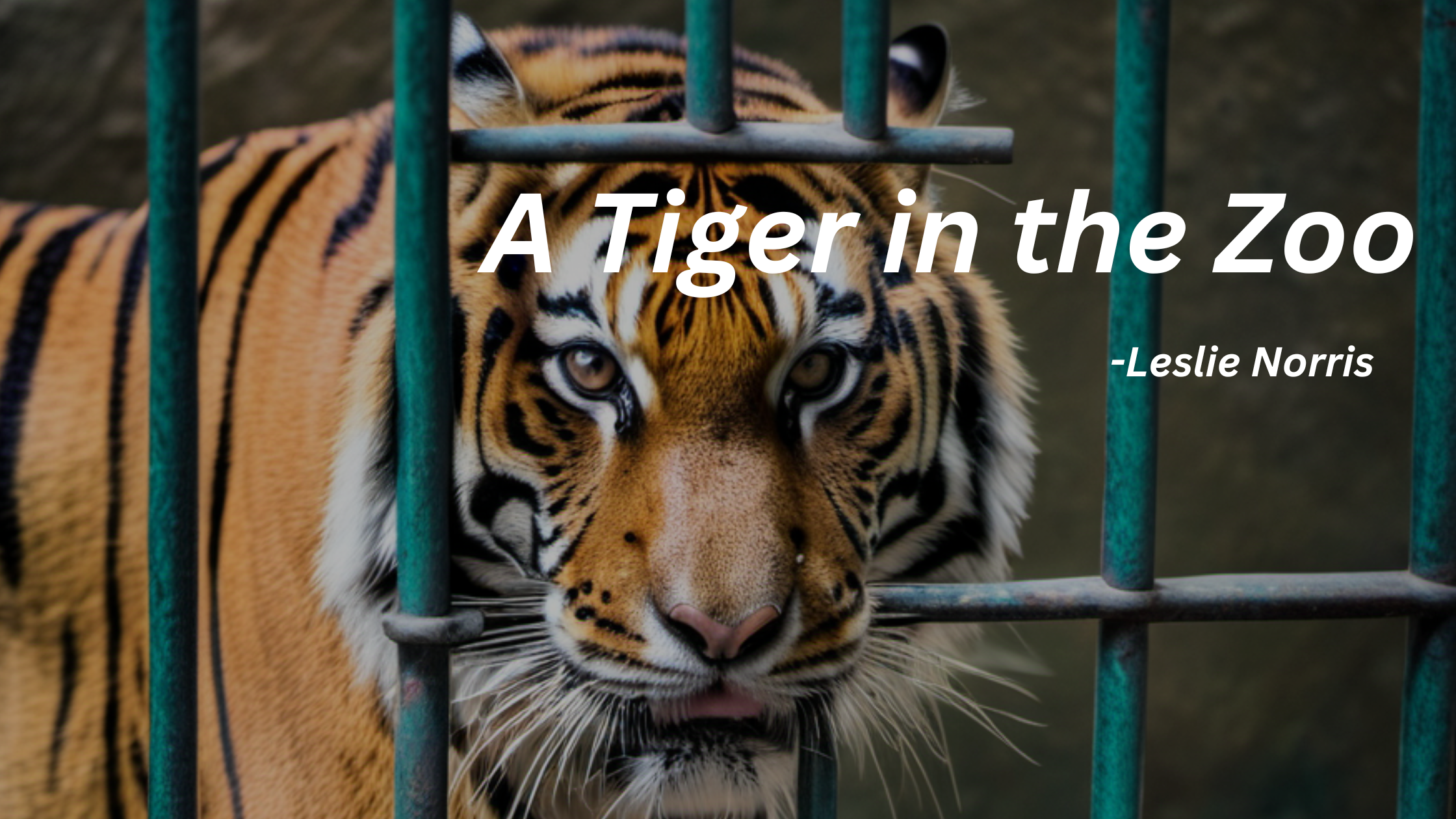
The poem “A Tiger in the Zoo” describes the anguish and restlessness of a tiger confined in captivity at a zoo. The poet tells how the tiger paces back and forth in its cage, reflecting on its days of freedom in the wild. The poem investigates the impact of captivity on the majestic creature, emphasizing its longing for its natural home while also questioning the ethics of keeping wild animals in captivity. It encourages readers to consider the impact of human actions on the life of these animals.
Here’s a more detailed explanation of “A Tiger in the Zoo” by Leslie Norris.:
Stanza 1:
The poem begins with an introduction to the tiger in a zoo. The line “He paces in his cage” immediately establishes the theme of captivity. The repeated phrase “Moving back and forth” highlights the boring and repetitive nature of the tiger’s life in captivity.
Stanza 2:
The poet characterizes the tiger’s motions as “dullness of fury,” implying that the once-wild and strong monster has become humbled and dissatisfied in the confines of the cage. This offers a striking picture of the effects of imprisonment on animals.
Stanza 3:
The focus moves to the tiger’s eyes, which are described as “far and indifferent.” This choice of words evokes a sense of distance and detachment, implying that the tiger is not at ease or content in its constrained setting. The use of images allows the reader to visualize the sadness in the tiger’s eyes.
Stanza 4:
The poet paints a stark contrast between the tiger’s current situation in the zoo and its natural environment. The phrase “jungle of his actual world” informs the reader that tigers are supposed to wander freely in the wild, emphasizing the issue of imprisonment and loss of natural environment.
Stanza 5:
The pacing tiger represents all wild creatures in captivity. The poem discreetly examines the rationale for restricting such gorgeous creatures and encourages readers to consider the ethics of keeping animals in zoos for human amusement.
Stanza 6:
The poet leaves the reader with a feeling of sympathy for the tiger. The poem finishes by inviting readers to think on the impact of human actions on the lives of wild animals. The usage of a tiger as a metaphor encourages readers to consider the larger issues surrounding animal captivity.
Themes:
Captivity: The key issue is the tiger’s captivity and the effects of being confined to a zoo.
Loss of Freedom: The poem contrasts the tiger’s natural habitat with its constrained life in captivity.
Human Responsibility: The underlying issue of human responsibility for wild animal captivity encourages readers to ponder the ethical ramifications.
Symbolism: The pacing tiger represents the bigger issue of animals in captivity, encouraging readers to consider the broader ethical concerns.
Conclusion:
“A Tiger in the Zoo” is a thought-provoking poetry that explores the mental and physical effects of imprisonment on a majestic beast. It urges readers to evaluate the ethical implications of confining wild animals in zoos.
Discover more from Dr. Ganesh Visavale
Subscribe to get the latest posts sent to your email.
 Dr. Ganesh Visavale